Trauma &
Dissociatie
In Nikki Nooteboom’s practice, work is grounded in the latest insights from the neurobiology of trauma and dissociation. Together, we focus on integrating the brain so that a sense of safety can be present, and you no longer have to be “on” all the time.
Why working with our neurobiology is essential in trauma and dissociation
What distinguishes a neurobiological framework is that behavior is understood in terms of what happens in the brain during trauma and dissociation. This approach forms the foundation for trauma therapy that focuses on the specific brain processes involved in dysregulation, getting stuck in survival states, and the loss of presence in the here and now.
Research shows that therapy targeting neurobiological processes leads to measurable changes in brain circuits involved in traumatic stress and dissociation.
Neuroscientific research
Within neurobiological research on trauma and dissociation, the work of Ruth Lanius has been leading for decades. It shows how traumatic stress is associated with specific changes in brain activity, integration, and presence. Her research provides an important framework for therapeutic approaches that focus on the underlying neurobiological processes in dissociation.
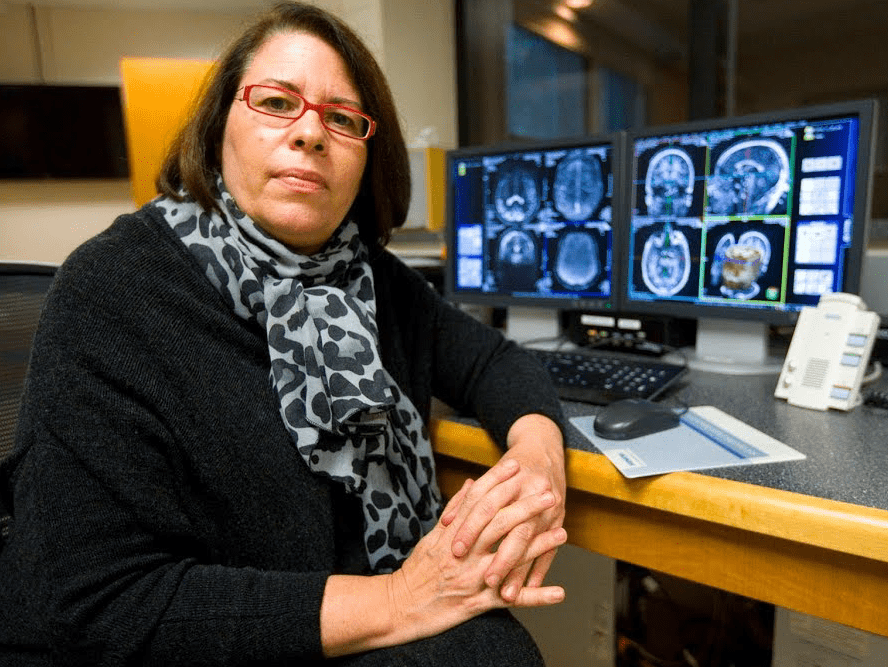
“While trauma has been seen as an invisible injury, it is now a visible injury, which we can see when we image the brain.”
Dr. Ruth Lanius (Canada) – specialist in the treatment and research of Mind-Body effects of trauma
Why working with our neurobiology is essential in trauma and dissociation
What distinguishes a neurobiological framework is that behavior is understood in terms of what happens in the brain during trauma and dissociation. This approach forms the foundation for trauma therapy that focuses on the specific brain processes involved in dysregulation, getting stuck in survival states, and the loss of presence in the here and now.
Research shows that therapy targeting neurobiological processes leads to measurable changes in brain circuits involved in traumatic stress and dissociation.
Neuroscientific research
Within neurobiological research on trauma and dissociation, the work of Ruth Lanius has been leading for decades. It shows how traumatic stress is associated with specific changes in brain activity, integration, and presence. Her research provides an important framework for therapeutic approaches that focus on the underlying neurobiological processes in dissociation.
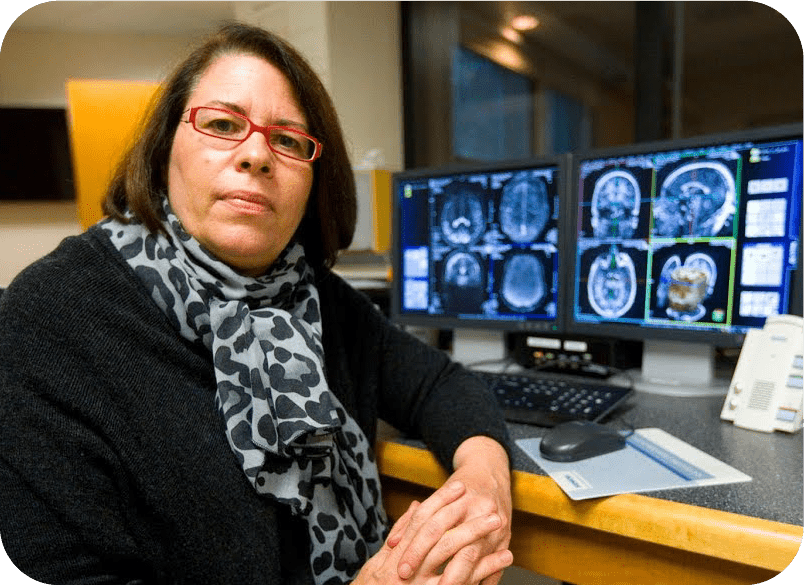
“While trauma has been seen as an invisible injury, it is now a visible injury, which we can see when we image the brain.”
Dr. Ruth Lanius (Canada) – specialist in het behandelen en onderzoeken van de Mind-Body effecten van trauma
Common experiences in trauma and dissociation
Common experiences in trauma and dissociation
When an experience—whether small or large—is overwhelming, the neurobiology automatically adapts to maintain safety. What was once helpful can continue to shape how you feel, think, and respond over time. The experiences below are common outcomes of a system that has been operating in survival for a prolonged period.
- Overanalyzing; knowing everything but not feeling it
- Feeling different from the rest of the world
- Feeling too much or too little and not understanding it
- Often not fully present
- Living largely in the past and sometimes still feeling like a child
- A sense of powerlessness and lack of control
- Wanting to connect with others but feeling afraid of contact
- Not understanding why your responses are so intense or, at times, flat
- Difficulty with self-care and maintaining relationships
- Always being “on” and picking up on everything
- Loneliness


Unsure about trauma therapy?
You may feel hesitant because previous therapy brought little change, talking did not move things forward, it mainly increased feelings of shame or failure, left you more unsettled rather than more stable, or because a diagnosis determined what was considered possible without truly aligning with what made sense to you.
In this approach to trauma therapy, nothing is forced. We first work on establishing sufficient presence and capacity, so that processing does not lead to renewed dysregulation or dissociation.

Valid reasons to hesitate about therapy
If your neurobiological system has been working for a long time to keep you safe, it will not automatically agree to change. Doubt, postponement, or resistance do not mean a lack of motivation; they indicate that something is being protected. So resistance is logical and welcome. You might recognize this:
- This won’t work for me anyway
- I’m too complicated
- There’s already too much going on
- I’ve already tried everything
- It takes too long
- It feels too vague
- I already have too much to deal with
- I don’t have the time or space for it
- Just leave it

REVIEW
Man, 50 years old from Belgium
I have always been highly cognitively oriented and come from a generation where seeking help from a therapist was considered taboo. Because of this, I approached therapy with strong skepticism. That skepticism faded quickly, as I began to notice real changes: my anxiety decreased, I was able to sleep again, and I started to recognize my automatic responses to triggers.
Her approach is different from other therapists. It does not focus on analyzing the past to influence present behavior through cognitive insight, but on resolving trauma and the patterns it has created. This process brings the focus back to the sense of self that can take the lead in how I respond and act.
Nikki is highly professional and clear in her way of working. There is a structured process, and she is deeply committed to what she does.
Today, I can say that I have regained my self-confidence and a healthier balance in my life.
REVIEW
Male, 50 years from Belgium
I have always been highly cognitively oriented and come from a generation where seeking help from a therapist was considered taboo. Because of this, I approached therapy with strong skepticism. That skepticism faded quickly, as I began to notice real changes: my anxiety decreased, I was able to sleep again, and I started to recognize my automatic responses to triggers.
Her approach is different from other therapists. It does not focus on analyzing the past to influence present behavior through cognitive insight, but on resolving trauma and the patterns it has created. This process brings the focus back to the sense of self that can take the lead in how I respond and act.
Nikki is highly professional and clear in her way of working. There is a structured process, and she is deeply committed to what she does.
Today, I can say that I have regained my self-confidence and a healthier balance in my life.